But that doesn’t mean that we’ve not had our share of challenges and made our share of mistakes. I have cried at least 5,000 tears of frustration and joy at getting this thing up off the ground, with no external financial support whilst obsessively trying to maintain the integrity of the idea and diversity of people who had access to it. One of the biggest challenges is finding the resources to ensure we can offer the content to a diverse array of people, so that it’s not just those with financial means that can get further educated in these fundamental thinking tools for the future.
One of the models from the start has been to ensure that every program has scholarships and equity access, which we fund ourselves. Nowadays, many people get supported by their companies to come to our programs, so that enables us to redistribute some of these earnings into covering scholarships for others who don’t have financial support. I have almost gone bankrupt a couple times, but ensuring that the UnSchool is available to many different types of people is at its core. We have given away somewhere around $200,000 in scholarships to emerging leaders who would otherwise not be able to afford to attend a program like ours because equity is just part of our DNA. Along the way, some forward-thinking companies have helped out, supporting particular fellows from emerging economies, or sponsoring us with coffee or wine for programs (we are a school for adults after all!), but mostly we just eat into any potential profits, which means we are basically a very undesirable investment proposition!
But this project is not about making money; it’s about making change. I am really committed to supporting as many people as I can with our tiny-but-mighty team in uncovering the tools needed for making positive change. We offer value exchange internships, and anyone can apply for an equity scholarship for our online programs too. Obviously there are only so many programs we can run face-to-face, and even though I had initial resistance to online education, for the last two years, we explored, prototyped, and developed an interactive blended learning model that enables people to activate their leadership for change by equipping them with the tools they need to do so.
Another exciting development: we now have a certification system so that anyone who engages with our content can choose to validate their changemaking work and perhaps even go on to teach our method themselves!
The development process for our certification system was tough and long, as I wanted to ensure that it was not just someone sitting in their room watching videos, but instead that we had a mechanism for motivating local community action. This all resulted in our community activation points system that builds in many aspects of motivated community participation by encouraging people to do different things to gain the needed points for their certification level.
Our first approach was more of a pick-your-own adventure style system that didn’t quite work, as busy people need motivation, and many of the early adopters asked for more structure to support them moving through to a level they knew would validate them. So, I went back to some of the things that I had used to motivate me through my PhD and drew on the tactics I had developed to get me to the end goal (which was a challenge to say the least). Tools like a reflection and process journal, along with gamified tasks that I had set myself to apply new knowledge — these all helped inspire the version 2.0 of our certification system that we launched a few months ago, and now have many people tracking through!
The Practitioner, UnMasters, and Educator tracks are the outcome of these past five years and then some, teaching people how to activate themselves to make change. The format is designed to guide people through the complex content month by month, offering pauses and fast tracks. We are just about to certify our first few educators who then will be able to teach our content and run their own programs wherever they are in the world. The UnMasters is designed for career changemakers and entrepreneurs, and the Practitioner for people wanting to validate their skill set for creative change and positively disruptive design.
Future Thinking: Do I have to have a 5-Year Plan?
So what about the future? I am not into making five-year plans usually, but for the UnSchool, I do have one. In five years, when we turn 10 years old, I would love for the UnSchool to be obsolete. I hope that we have created a momentum and supported enough leadership and experiential learning provocations that others are taking the pedagogical approaches and ideas and seeding them in new and exciting ways. This is why the current certification model is so important, as I hope that with enough supported emerging leaders, we can create a continuum of change that evolves and expands exponentially until we have addressed many of our pressing problems in entirely new and unique ways.
On a personal level, I want to have disrupted the way we educate enough to ensure that the future of knowledge transfer is experiential and transformative, not reductive and linear, as it is so often the case today. I want to see that we design curriculums that are dynamic and hands-on, so that we equip people of all ages with the tools they need to agentize themselves in a world that needs creative changemakers as much as it needs bankers and engineers. I would love for a 15 year old to answer the question, “What do you want to do for your career?” with, “Be a creative changemaker and help design a future that works better than today,” and for that 15 year old to have that opportunity available to them, no matter where they are in the world.
And say in five years the UnSchool is still needed and we have not achieved these ambitious disruptive goals? Then I hope that the people who come to help build it each time will be more activated to continue to build it even more, be organized and inspired enough to take the ideas and spread them even further and deeper so that we can work toward solving some of the complex issues afflicting this beautiful planet that we all share.
What are the big challenges that we face in activating this change over the next five years? I see a bit of a battle in managing the digitalization of content, knowledge, and all the competition for attention that is going on as we move ever closer to a digitally-addicted age. I am not a Luddite; I love technology and all the life enjoyment that it brings. But there are a lot of trade-offs that we must contend with, and one such issue is the manipulation of digital social spaces by larger powers for the misdirection of people into more narrow pathways of thinking and doing. All of the platforms for social sharing seem to have converged along the same pathway of attention-seeking behaviors, and this is something I have grappled with ever since communicating ideas became about competing for attention in ever-more ludicrous ways in a saturated market.
So, our big question now is, “What does ethical and equitable communication look like?” And how do we do it when two giant companies, Google and Facebook, own most of the digital communication space and require you to ‘pay to play’, funnelling you evermore into a myopic view of the world and the ways in which you can get access to ‘your’ people? This is a big challenge for us and many more integrity-based organizations, as the system is designed to extract more of your time as a viewer and more of your capital as a producer. Understanding our digital carbon footprint and working toward sustainable and equitable digital policy is our new goal. We, like many others, just don’t understand the impact of our actions every time we upload an image to Instagram or release a new video. So we are working on that, and hope to have some way of sharing the learnings from this soon so that we can have more ethical intentions with our digital actions.
To start this transition, we developed a more long-form communication exchange through our weekly journal articles (which you are reading now!), in which we cover topics relevant to our community and highlighting the incredible inspiring activities of our alumni.
If the UnSchool has taught me anything, it is that everything worth doing requires work, and that the work you do teaches you how to do things better, or at least helps refine the way we each operate our life on this beautiful shared spaceship Earth. As I have mentioned in many interviews, one of the main reasons I ditched design school to become a sustainability-focused sociologist was because I had learned that everything was interconnected and that would mean I would have negative impacts without knowing it, which to me, seemed ridiculous. I know not all we do can be managed or controlled, and sometimes good intentions lead to not great outcomes. But we can throw our energy and creativity at the problems that persist in the world we live in, helping to etch away at them bit by bit so that we get to a place in the future, however far away that is, that is better, more equitable, sustainable, regenerative, and positive — otherwise, what’s the point?
What I have learned
Reflection is key to what we teach, so here is me giving myself a challenge to come up with the top five things I have learned from making the UnSchool:
-
Starting things is hard work, but everything worth doing requires work
-
Money does not always equal change; it helps, but change is valueless
-
It’s possible to get a lot of shit done in a small amount of time and still be energized by it, especially when you have good people to work with
-
Burnout is a real. It creeps up on you, and when it happens it hurts to have lost all the passion for what you do. But the solution is to rest and regenerate, and then get right back to it
-
There is no such thing as wasted time, just paths you go down that may not end up where you intended. But, the place you land will have some value to offer in getting you to where you want to be
AND a big thank you to all these INCREDIBLE humans!
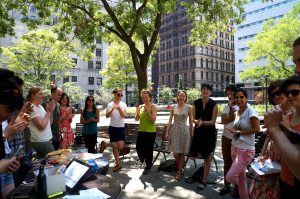
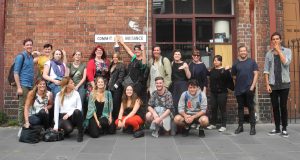
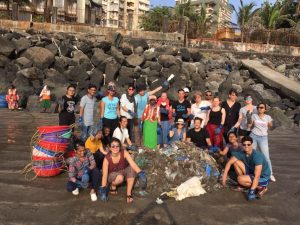
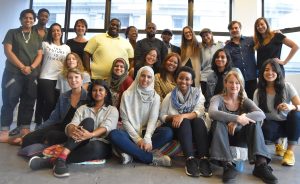
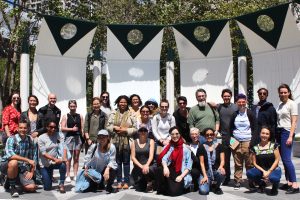
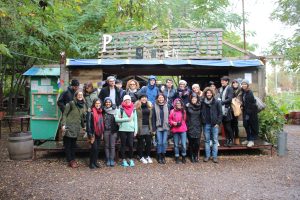
The UnSchool is the outcome of the people who come to it and over the years we have had hundreds of amazing and inspiring people join us on our adventures into systems change, sustainability and social impact. Here are the cohorts from our 9 emerging leaders fellowship programs!
THANK YOU, TO EVERY SINGLE ONE OF YOU!